

Description
The prohibition of riba is not merely a rule concerning individual loans. It raises a much larger question: What would an economic order rooted in divine justice actually look like?
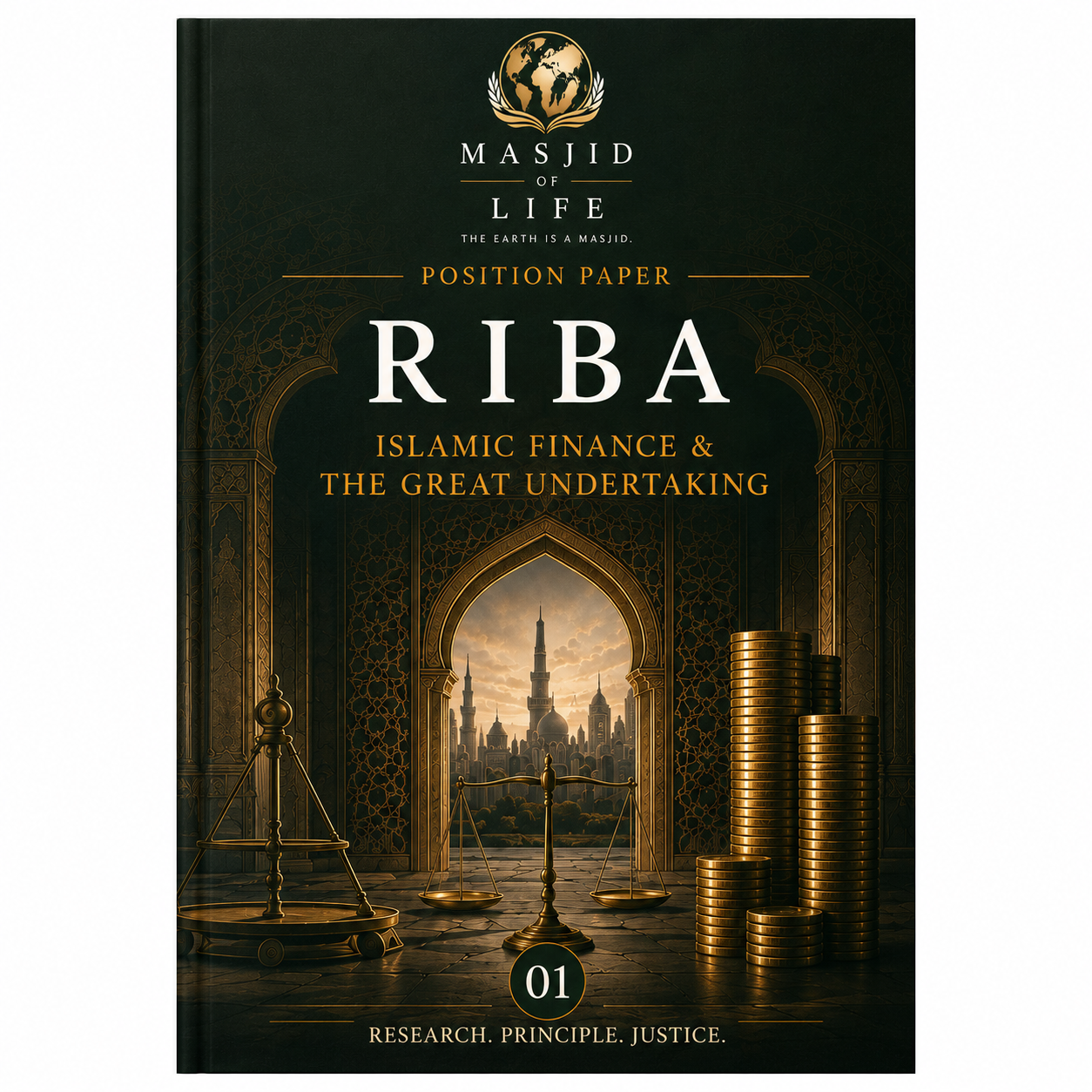
Riba: Islamic Finance & The Great Undertaking explores that question from revelation to modern economic life.
Beginning with the Qur’an and Prophetic teachings concerning riba, the paper examines usury as a moral and economic issue before turning to the development of modern banking, fiat currency, inflation, central banking, debt, and the concentration of economic power.
It then examines the principles and mechanisms of Islamic finance—including asset-based transactions, leasing, partnership, shared risk, and benevolent lending—and considers both their potential and their limitations within today’s global monetary system.
The paper does not ignore the difficult circumstances Muslims actually face. It addresses necessity, personal responsibility, debt discipline, homeownership, investment, and the challenge of pursuing principled financial conduct when genuinely interest-free alternatives may be inaccessible or structurally incomplete. The position advanced is expressly described as a “constrained concession,” not an endorsement of riba.
Finally, the discussion moves from critique to construction: community ownership, waqf, cooperative housing, local savings pools, ethical investment, asset-backed systems, technology, legal reform, education, and strategic alliances form part of a six-pillar vision for an interest-free financial future.
The ultimate undertaking is not simply to survive an unjust financial order, but to build a better one.
Reviews
There are no reviews yet.